


living kitchen cooks membership
Let’s Start Cooking Together!
Week 1 (May 4th): Menu at a Glance



Power Tacos with Roasted Sweet Potato
Mediterranean Tuna Pasta with Tomato & Crispy Garlic
Easy-Peasy Butternut Squash Soup & Quicky Socca Bread
To Live For Berry Banana Muffins
Grocery List: view PDF and print
Living Kitchen Cooks Grocery List Weeks 1 & 2
Your Cooking Playlist
The Recipes:
1. Power Tacos with Roasted Sweet Potatoes
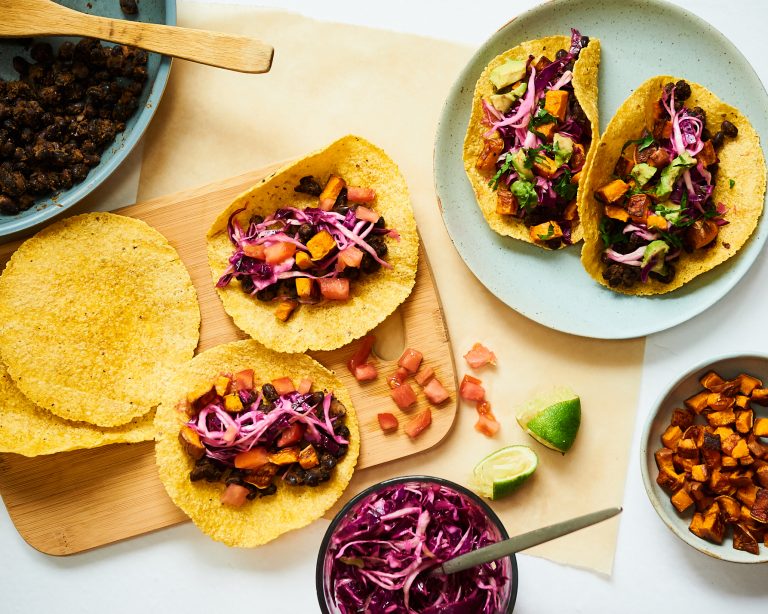
Power Tacos with Roasted Sweet Potato
Homemade tacos are fun and easy to make at home. Feel free to get creative with these and swap in other ingredients that you have instead of cabbage. You could chop some lettuce or kale if you don’t have cabbage.
Protein Optionals
- 1 14 oz can black beans OR 1 lb ground beef, chicken or turkey
- 1 tsp chili powder
- 1/2 tsp granulated garlic powder
- 1/4 tsp onion powder
- 1/4 tsp ground cumin
- 1 tsp tamari or soy sauce
Quick Cabbage Slaw
- 2 cups green cabbage (thinly sliced)
- 2 cups red cabbage (thinly sliced)
- 1 lime (juiced)
- pinch sea salt
- 1 Tbsp extra virgin olive oil
Roasted Sweet Potato
- 2 medium sweet potatoes (diced into small cubes)
- splash extra virgin olive oil or avocado oil
- pinch sea salt and pepper
Garnish Options
- 6 corn tortillas
- handful cilantro (roughly chopped)
- 1 avocado (sliced)
- 1 tomato (diced small)
-
Preheat oven to 375
-
Line a baking sheet with parchment paper. Spread the sweet potatoes out so that they are flat and not overlapping. Rub with some extra virgin olive oil or avocado oil, sea salt and pepper.
-
Roast the sweet potatoes for around 25 minutes. Check on them at the 20 minute mark and give them a stir. You can roast longer than 25 minutes if they aren’t crisp enough on the edges
-
Meanwhile, saute the protein of your choice to make the taco filling. Heat a dash of extra virgin olive oil (or avocado oil) in a skillet and add black beans (or turkey or beef) along with all the spices. Saute for 5-10 minutes (poultry and meat will need more time than black beans). Add tamari and a pinch of sea salt to taste. You can always add more spices if you prefer.
-
Slice the cabbage and combine the ingredients for the slaw in a mixing bowl.
-
Prep any of the toppings you want to use.
-
Warm up the tortillas in the oven or toaster oven (we find that a few minutes at 350 works well to soften them).
-
Then you’ll compile all of the ingredients together to make tacos- add the filling, some sweet potatoes, cabbage slaw, and garnishes of choice. Serve immediately after putting them together.
What to you can prep ahead of time:
- Slice cabbage either using your food processor or by hand in the morning or night before, cover and leave in the fridge.
- Dice the sweet potatoes a day before, place in an airtight container in the fridge. You can also roast these earlier in the day and heat them up later when you’re ready to eat
Substitution Guide:
- If you’re out of onion power, use more garlic powder
- You can make this vegetarian by using black beans OR use ground beef, turkey or chicken
- If you don’t have tortillas, you can use nachos or whole cabbage leaves as the “wraps”
2. Pulao Inspired Rice
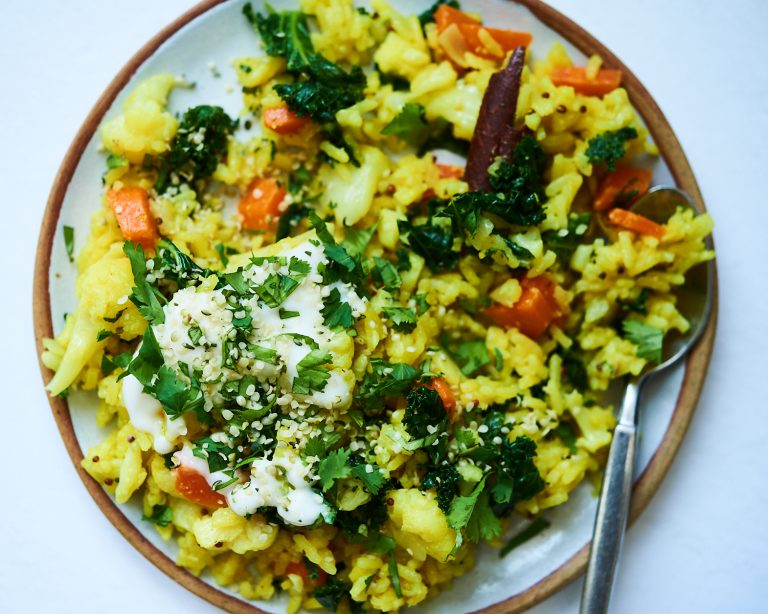
Pulao Inspired Rice
You probably have rice in your pantry right now, don't you? And, if you don’t eat rice, swap it for cauliflower “rice” instead (if you have any questions about making that swap, feel free to reach out). This is a nice warming, yet light, meal that makes boring rice taste interesting and unique. We offer two protein options below: chickpeas or chicken, but if you want to put you own protein spin on it and use tofu, shrimp or tempeh, you can.
- 2 tsp coconut oil or extra virgin olive oil
- 2 small shallots or 1 yellow onion (diced)
- 3 garlic cloves (chopped)
- 1 carrot (diced)
- 2 cups cauliflower florets (fresh or frozen)
- 1/2 cup frozen pees (optional)
- 1/4 tsp sea salt
- pinch pepper
- 1 cup brown basmati rice (or sub white basmati, white rice, or brown rice)
- 2 cups green kale, chopped (or sub other type of kale, collards, spinach, chard)
Spice Mixture:
- 1/2 tsp cumin seeds or ground cumin
- 1/2 tsp mustard seeds (omit if you don't have)
- 1/2 tsp ground cinnamon (or 1/2 cinnamon stick)
- 4 green cardamom pods (or 1/2 tsp ground coriander)
- 1 tsp turmeric
Protein Options:
- 14 oz can chickpeas (or 1.5 cups cooked chickpeas) (drained and rinsed)
- 1 lb chicken breast or thigh (bonelesss and skinless)
- 1 Tbsp coconut oil
- pinch sea salt and pepper
Garnish Options:
- handful fresh cilantro (chopped)
- handful green onions (chopped)
- 1/4 cup plain yogurt or dairy-free yogurt
- 1/2 lemon or lime (squeezed)
-
Drizzle some coconut oil or extra virgin olive oil in a medium sized pot or dutch oven and heat on medium
-
Add the shallots or onion and saute for around 5 minutes, until beginning to turn translucent
-
Add the garlic and spices and saute for 1 minute. Then add in the carrot, cauliflower and green peas (if using). Give the veggies a good stir and coat in the spices, sauteeing for 3-4 minutes. Season with a nice pinch of sea salt and pepper
-
Pour the rice and water into the pot with the sauteed veggies. Bring to a boil and then reduce the heat so the mixture is just simmering. Cover and simmer on low heat for 30-35 minutes for brown basmati or brown rice, or for 20 minutes for white basmati or white rice
-
Meanwhile, prepare your protein of choice: heat coconut oil in a skillet on medium-high.
-
For the chicken, season it with salt and pepper, sear it on one side for 9 minutes without moving, flip the chicken and sear for another 6-8 minutes on the other side. Let it rest for 2 minutes. If you have a meat thermometer, insert it and it should read 165 F. If you don't, slice the chicken into pieces, if it's not cooked, continue to saute it until it is.
-
For the chickpeas, add them into the pan and continue to shake the pan so they're coated, season them with salt and pepper.
-
Add the chopped kale (or other type of green) into the pot and let steam in the heat of the rice for a few minutes. Stir all together, incorporating the kale into the rice pilaf
-
Taste and add more sea salt and pepper if desired
-
Once the rice pilaf is ready, serve onto plates and sprinkle the crispy chickpeas over top or the chicken
-
Top with cilantro and/or green onions. Add a dollop of yogurt if you like. Add a squeeze of lime or lemon juice
Substitution Guide:
Rice: If you want to swap out brown basmati rice you can use cauliflower “rice”, any other variety of rice or quinoa
Vegetables: If you don’t have the veggies within the recipes sub for the closest ones you do have, for example, if you don’t have carrots is there another root veggie you do have like sweet potatoes
If you don’t have kale sub for spinach, collards, broccoli, bok choy or swiss chard (these can be fresh or frozen)
Remember, that frozen veggies can work just as wonderfully and they may be easier to stock up on and keep longer
Spices: If you don’t like or have the above spices, simply omit them from the recipe, it will just be a simpler, yet still delicious, version.
Garnishes: these are always optional based on what you may have on hand. These always elevate a dish but will not take away from it if you don’t have them
Prep Guide:
This is a fairly quick recipe to prep and cook. If you want it to go faster you can cut the cauliflower and carrot ahead of time and keep them in an airtight container the fridge.
You can also prep the protein ahead of time, especially if you’re using chicken.
Mediterranean Tuna Pasta with Tomato and Crispy Garlic

Mediterranean Tuna Pasta with Tomato and Crispy Garlic
Going along with our pantry-cooking theme, this hearty pasta salad uses both tuna and chickpeas. It has simple ingredients but zesty Mediterranean flavours and the garlic chips are really the start of the show. Substitution guide will be below the recipes in case you need to make any swaps.
- 3 servings gluten-free penne (or pasta of choice)
- 10 cloves garlic (thinly sliced)
- 4 Tbsp extra virgin olive oil (divided)
- 1 small red or yellow onion (slivered)
- 1.5 cups cherry tomatoes or any tomato (chopped)
- 1 can tuna (drained)
- 14 oz can chickpeas (or 1.5 cups cooked chickpeas) (drained and rinsed)
- 3 cups kale (chopped)
- 2 tsp apple cider vinegar
- 2 to 3 Tbsp lemon juice (add to taste)
- 1/2 cup fresh basil leaves (optional) (roughly chopped)
- 1/2 tsp sea salt
- pinch pepper
-
Prepare the pasta according to instructions on the package
-
In a skillet, heat 1 Tbsp of extra virgin olive oil over medium heat. Add in the garlic slices and toss around until they become brown and crisp, this will only take a few minutes.
-
Use a slotted spoon to scoop the toasted garlic chips out of the oil and set aside. Save the oil that’s left in the pan, you’ll use it to season the pasta
-
If you used a large skillet to cook the garlic chips, use the same one of the rest of the recipe. If you used a small skillet, you’ll need a larger one for the rest of the steps. Leave the garlic infused oil in the skillet (or add to a larger one).
-
Drain the liquid from the can of tuna and chickpeas and add the tuna and chickpeas to the skillet. Flake the tuna into pieces as it’s cooking. You’ll only need to do this for about 2- 3 minutes before adding in the kale. Continue to saute for another minute, until the kale is wilted.
-
Whisk together 3 Tbsp of extra virgin olive oil with the apple cider vinegar, lemon juice, salt and pepper and pour over the ingredients, tossing all together
-
Add in the cooked pasta along with the seasoning and chopped basil.
-
Top with garlic chips!
Substitution Guide:
If you don’t eat tuna, leave it out and only use chickpeas or if you don’t eat chickpeas, omit them and only use tuna.
If you’re grain-free, you can simply eliminate the pasta, the dish will still be filling OR you can use zucchini noodles, beet noodles or squash noodles. You can either eat them raw, or quickly sautee them in some extra virgin olive oil to soften them and then add them to the recipe.
If you don’t have kale, any other green will do like broccoli, spinach, collards or even green or purple cabbage.
If you don’t have apple cider vinegar you can swap it for more lemon or red wine vinegar, white wine vinegar or balsamic vinegar
Fresh basil always adds an element of freshness, if you don’t have it but you do have parsley or cilantro, you can use those or just leave it out completely.
Prep Guide:
This is a quick recipe, but if you wanted to make it even quicker, you can cook the pasta ahead of time, drizzle a little olive oil over it and store it in the fridge.
Easy-Peasy Butternut Squash Soup with Quicky Socca Bread
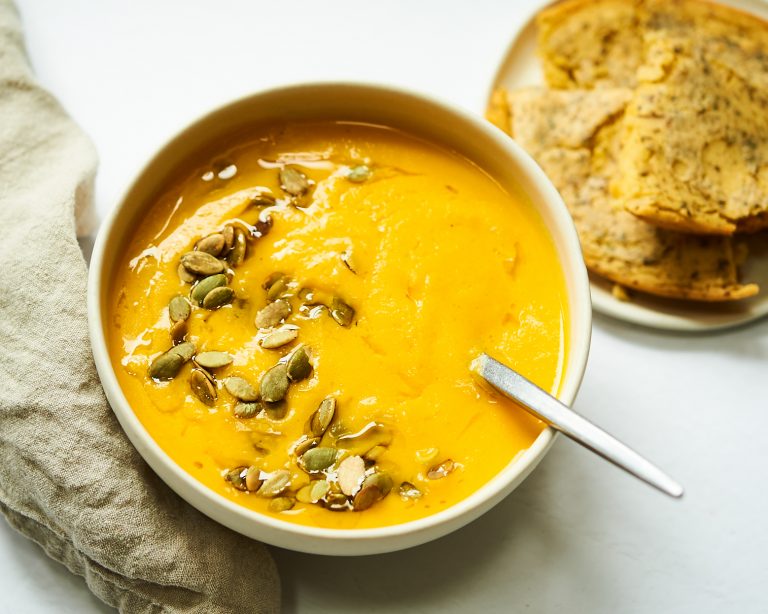
Easy-Peasy Butternut Squash Soup with Quicky Socca Bread
A hot bowl of soup is always comforting and these days it’s become one our go-to recipes to feel a little bit better amidst all the stress and anxiety. This soup is really easy to modify if you’re missing any of the ingredients (which we'll highlight below the recipe). Choosing to eat it with socca adds a nice "bready" element, while also giving you additional protein and fiber.
- 1 Tbsp extra virgin olive oil
- 1 yellow onion (diced)
- 1 butternut squash (about 4 cups) (peeled and diced)
- 3 carrots (peeled and diced)
- 1 small celeriac or 2 stalks of celery (peeled and diced)
- 4 cups veggie broth, bouillon cube or water
- 1/2 tsp sea salt
- pinch pepper
Optional Flavourings: Indian
- 1 inch ginger root (minced (not peeled))
- 2 tsp curry powder
Optional Flavourings: Italian
- 2 tsp Italian seasoning
Topping:
- 1/2 cup pumpkin seeds, sunflower seeds or slivered almonds (lightly toasted)
-
Pour the extra virgin olive oil in a large pot and heat on medium.
-
Add in the onions and saute for around 5 minutes, until beginning to turn translucent.
-
Then add the squash, carrots and celeriac (or celery) and stir around, sauteing for a few minutes. If you’re using ginger or any spices, add them at this point.
-
Pour the broth or water into the pot, along with a nice pinch of sea salt and pepper.
-
Bring to a boil and then reduce the heat so the soup simmers. Cover and simmer on low heat for 25-30 minutes, or until all the veggies are tender and well cooked
-
Carefully pour the soup into a blender (or use an immersion blender) and blend until smooth and creamy.
-
Taste and add more sea salt and pepper if needed. If you find the soup too thick, you can always add a little bit more broth or water to get your desired consistency.
Substitution Guide:
If you don’t have squash, sub it for sweet potatoes, you’ll need about 4 cups cubed, which is about 2-4 sweet potatoes, depending on their size
If you don’t have celeriac, use celery and if you’re out of celery, just skip the ingredient all together
The spices do add an extra oomph to the recipe, so if you have them, use them to flavour the soup either with Indian or Italian flavours. If you don’t have curry powder you can add 1 tsp garam masala and 1/2 tsp turmeric.
If you need extra protein, beyond the socca bread, you can add cooked pulled chicken slices into the soup or 1 cup of white beans.
Prep Guide:
Peel and cut the squash ahead of time, place them in an airtight container in the fridge. If you hate cutting squash, see if you can buy pre-cut squash.
Socca Bread
- 1 cup chickpea flour
- 2 cups water
- 1/2 tsp sea salt
- 1 tsp Italian seasoning (optional) or 1/2 tsp turmeric (optional)
- 1 1/2 Tbsp extra virgin olive oil or avocado oil
-
Preheat oven to 400
-
Whisk together the chickpea flour, water, sea salt, oil and whichever spices you're using, if any, either Italian seasoning or turmeric, until you have a smooth texture and lumps are gone
-
Coat a cast wide iron skillet or baking tray with extra virgin olive oil or avocado oil. The wider and bigger the pan, the thinner the socca bread will be, it's up to you whether you like it thin or thick.
-
Then pour the mixture into the oiled skillet and bake for 25 minutes and broil for 5 minutes at the end to get a crispy, caramelized top.
Prep Guide:
This can be prepped in advance and stored in an airtight container in the fridge for 4 days or in the freezer indefinitely.
To Live For Berry Banana Muffins
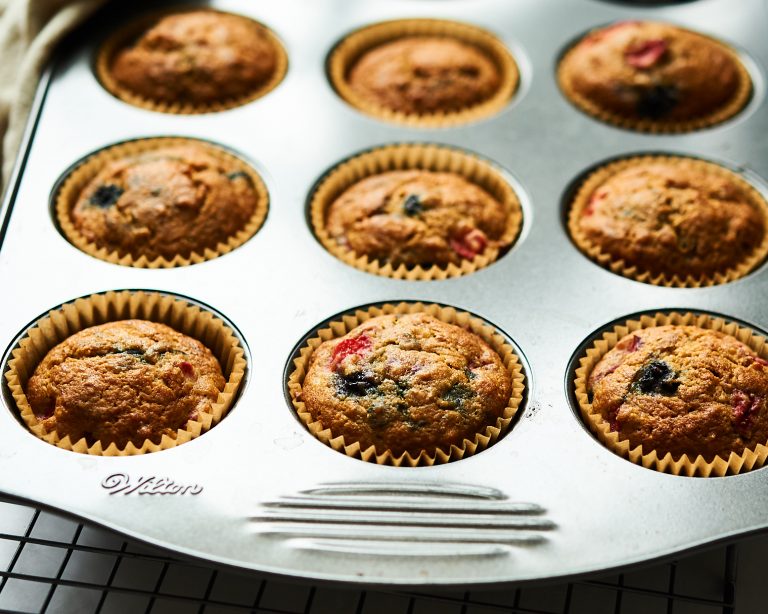
To Live For Berry Banana Muffins
These are amazing! You will fall in love with them, we dare you not to!
Dry Ingredients
- 1/3 cup brown rice flour
- 1/3 cup almond flour
- 2 tsp baking powder
- 1/2 tsp baking soda
- 1/4 tsp sea salt
Wet Ingredients
- 1/2 cup banana (mashed)
- 1/3 cup melted coconut oil
- 1/4 cup coconut sugar
- 2 eggs
- 1 cup mixed berries (like strawberries or blueberries) (sliced, fresh or frozen)
-
Preheat oven to 375 and line muffin pan with liners or grease the muffin pan well with butter or coconut oil.
-
Mash the banana in a mixing bowl with a fork so it’s creamy and then mix together with the melted coconut oil, coconut sugar and whisk in the eggs.
-
In another bowl, mix together the flours, baking powder, baking soda, and sea salt. Fold the dry ingredients into the wet and stir all together.
-
Then fold the berries into the batter.
-
Pour into the prepared muffin liners and bake for 25 minutes, or until firm on top and a knife or toothpick comes out clean.
Substitution Guide:
Flour: If you don’t have almond flour, we think this recipe will work with 2/3 cup of brown rice flour (we didn’t test it this way, but we think it would work). Or, you could probably use 2/3 cup of oat flour or even 2/3 cup of spelt flour if you’re not gluten free.
Everyday Avocado Dip

Everyday Avocado Dip
If you're more of a savoury person, we've got you! This avocado dip is so forgiving because you can swap in a variety of ingredients and it'll still taste great. It works well as a dip with tortilla chips or crackers. Or, if you're grain free, enjoy it with your favourite veggie sticks…we like to get creative with things like radish and pickles, or you can stick with classics like celery and carrot sticks.
- 2 ripe avocadoes
- 1/2 to 1 lime or lemon (juiced)
- 1 clove garlic (minced)
- pinch sea salt (to taste)
Optional
- 2 Tbsp red onion (minced)
- 2 to 3 Tbsp cilantro (diced)
- handful tomato (diced)
-
Cut the avocadoes in half and scoop out the flesh into a mixing bowl.
-
Add in the lime or lemon juice, garlic and sea salt to taste. Feel free to add other ingredients that you'd like to include.
© 2020 The Living Kitchen Wellness Group